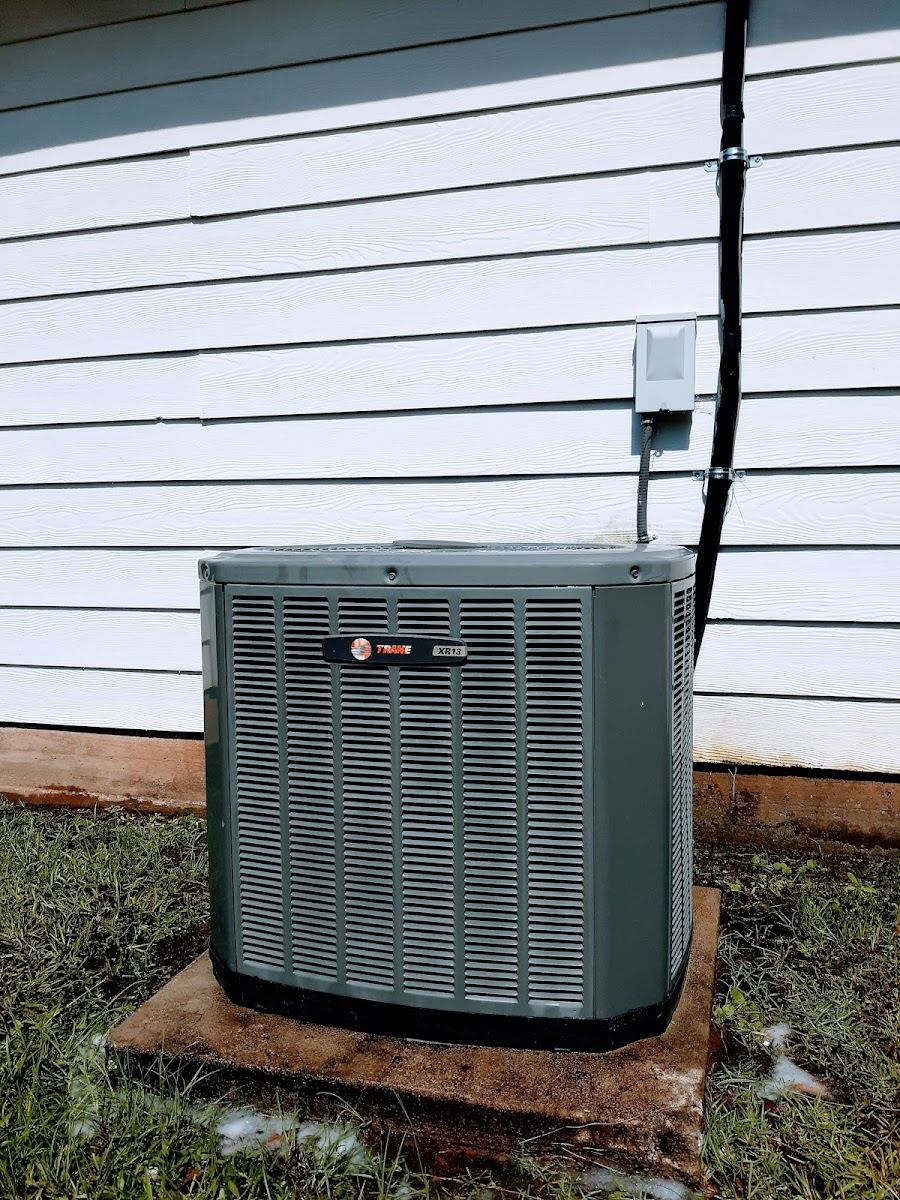
Ice forming on your AC in the middle of summer isn't normal. Here's why it happens and how we fix the root cause.
Ice on Your AC in an Alabama Summer Isn't Normal
It's the hottest week of a Phenix City summer, your air conditioner is running nonstop, and somehow there's frost on the lines or a block of ice clinging to the unit. Meanwhile, the air coming out of your vents feels weak and the house just won't cool down. It feels backwards. How can something covered in ice be failing to make cold air?
Here's the truth: a frozen AC coil is always a symptom, never the real problem. The ice is your system telling you something upstream is wrong. And in our Chattahoochee Valley climate, with high humidity and machines that run hard from May through September, the conditions that cause freezing show up more often than folks expect.
If you're seeing ice right now, the single most useful thing you can do is turn the cooling off and let it thaw before you do anything else. Below we'll walk through exactly why coils freeze, what you can safely check yourself, and when it's time to call a technician to find and fix the root cause.
How a Coil Freezes in the First Place
Your AC has two coils. The indoor evaporator coil is where refrigerant absorbs heat from your home's air. For that coil to work, two things have to stay in balance: enough warm air moving across it, and the right amount of refrigerant flowing through it. When that balance breaks, the coil surface drops below freezing, and any moisture in the air condenses and freezes solid right on the fins.
Once a thin layer of ice forms, it acts like insulation. The coil can no longer pull heat from your air, so it gets even colder, and the ice grows. That's why a small frost patch becomes a full block of ice surprisingly fast. The cruel irony is that a frozen coil cools your house less, not more, even though it's covered in ice.

The Most Common Causes We See in Phenix City Homes
Across thousands of service calls in Russell, Lee, Muscogee, and Harris Counties, the same handful of culprits come up again and again. Most fall into two buckets: not enough airflow across the coil, or a refrigerant problem.
Airflow-related causes are the most common and often the easiest to prevent:
- A dirty or clogged air filter starving the coil of warm air. This is the number one cause we find, and it's the cheapest to avoid.
- Closed, blocked, or too few supply vents. Shutting vents in unused rooms can actually choke the system.
- A dirty evaporator coil caked with dust and grime, which insulates it just like ice does.
- A weak or failing blower motor that isn't pushing enough air.
- Collapsed, crushed, or undersized ductwork, common in older Ladonia and downtown Phenix City homes.
When Refrigerant Is the Real Problem
The other major cause is low refrigerant, and this one almost always means a leak. Refrigerant is not a consumable like gas in a car; your system holds a sealed, fixed charge. If the level is low, it leaked out somewhere. When the charge drops, the pressure in the coil falls, the temperature drops below freezing, and ice forms.
This is why a simple top-off is never the right answer. Adding refrigerant to a leaking system is illegal under EPA rules, bad for the environment, and a waste of your money, because it'll just leak out again. The correct approach is EPA-compliant leak detection: we find the leak, repair it, and then recharge the system to the manufacturer's exact spec. Our frozen-ac-coil-repair work always starts by identifying why the coil froze so the same thing doesn't happen again in three weeks.
Our local humidity makes refrigerant issues worse. The Chattahoochee River microclimate accelerates corrosion on coils and copper lines, which means pinhole leaks develop on Phenix City systems sooner than the generic advice online would suggest. If your unit is more than eight or ten years old and freezing up, a corroded coil leak is a very real possibility.
The Humidity Factor: Why This Happens More Here
Our part of Alabama and Georgia deals with heat and moisture in a way drier climates don't. That extra humidity matters for frozen coils in a few specific ways.
First, more moisture in the air means more water available to freeze the instant a coil runs too cold, so problems escalate faster here. Second, that same humidity feeds algae and slime growth in your condensate drain line. When the drain clogs, water backs up, and the resulting moisture and restricted operation can contribute to freezing and water damage at the same time. Third, the river-valley air is hard on metal, so coils corrode and spring leaks earlier than the manufacturer's averages assume.
None of this means your system is doomed. It just means routine attention matters more in the Chattahoochee Valley than it does in, say, Arizona. A clean filter, a clear drain line, and an annual checkup go a long way toward keeping ice off your coils all summer.
What to Do Right Now If Your Coil Is Frozen
If you've got ice today, here's the safe, sensible order of operations. Do not chip at the ice with a knife or screwdriver. The coil fins and tubing are thin and easy to puncture, and a punctured coil turns a cheap fix into an expensive one.
Follow these steps:
- Turn the cooling off at the thermostat, but switch the fan to ON. Running just the fan blows warm household air over the coil and speeds up thawing.
- Give it time. A fully iced coil can take one to three hours to thaw completely. Place towels around the indoor unit to catch the meltwater.
- While it thaws, replace your air filter if it's dirty and make sure all your supply vents are open and unblocked.
- Once fully thawed and dry, turn cooling back on and watch it. If it cools normally and stays ice-free, a dirty filter was likely the cause.
- If it freezes up again, or if the airflow still feels weak or the house won't cool, stop running it and call a professional.
When to Call a Pro, and What We'll Do
A fresh filter and open vents are things any homeowner can handle. But if the coil refreezes, if you suspect low refrigerant, if the blower sounds weak, or if you're just not sure, that's where we come in. Repeated freezing left alone can burn out your compressor, which is the single most expensive part of the whole system. It's far cheaper to fix the cause early.
When we arrive for an ac-not-cooling or frozen-coil call, we diagnose the actual root cause rather than guessing. We check airflow, inspect and clean the coil, test the blower, measure refrigerant pressures, and run EPA-compliant leak detection if the charge is low. Then we give you honest repair-versus-replace guidance with real numbers, no commission-driven upselling. Scott Copeland has stood behind that approach here since 1997, and we service all major brands, so you're never locked in.
The best fix, of course, is the one that keeps it from happening at all. Annual ac-maintenance catches dirty coils, weak airflow, and small refrigerant leaks before they freeze your system on a 95-degree July afternoon. To schedule a tune-up or get a frozen unit diagnosed today, call us at +1 (327) 210-5999. We offer same-day service when available, and weekend service by call, across Phenix City, Smiths Station, Columbus, Opelika, Auburn, and the surrounding communities.
Frequently Asked Questions
No. Low refrigerant means you have a leak, and topping it off is both illegal under EPA rules and a waste of money since it will leak out again. The right fix is to find and repair the leak, then recharge to the manufacturer's exact spec. A licensed technician handles this safely.
Need a hand from a local technician?
My Affordable Air has helped Phenix City families breathe better since 1997. Call for honest, licensed HVAC help.