Adding a room, cooling a garage, or replacing a whole system? Here's how the two approaches compare.
Cooling One Room or the Whole House? Start Here
You're standing in a stuffy bonus room or a garage that hits 95 degrees by noon, and your central system either can't keep up or doesn't reach that space at all. Maybe you're staring down a full system replacement and someone mentioned mini-splits. The choice between a ductless mini-split and central air feels bigger than it should, because both cost real money and both are supposed to last 12 to 15 years here.
Here's the honest framing before you spend a dollar. There is no single right answer. The better question is what you're trying to cool, whether you already have ductwork, and how the Chattahoochee Valley climate is going to push on whatever you install. We've put both in homes all over Russell and Lee Counties since 1997, and the deciding factor is almost always the layout of your home, not which technology is 'better.'
This guide walks through how the two compare on cost, comfort, efficiency, and the specific demands of hot, humid Alabama summers. Use it to narrow things down before you call anyone.
How Each System Actually Works
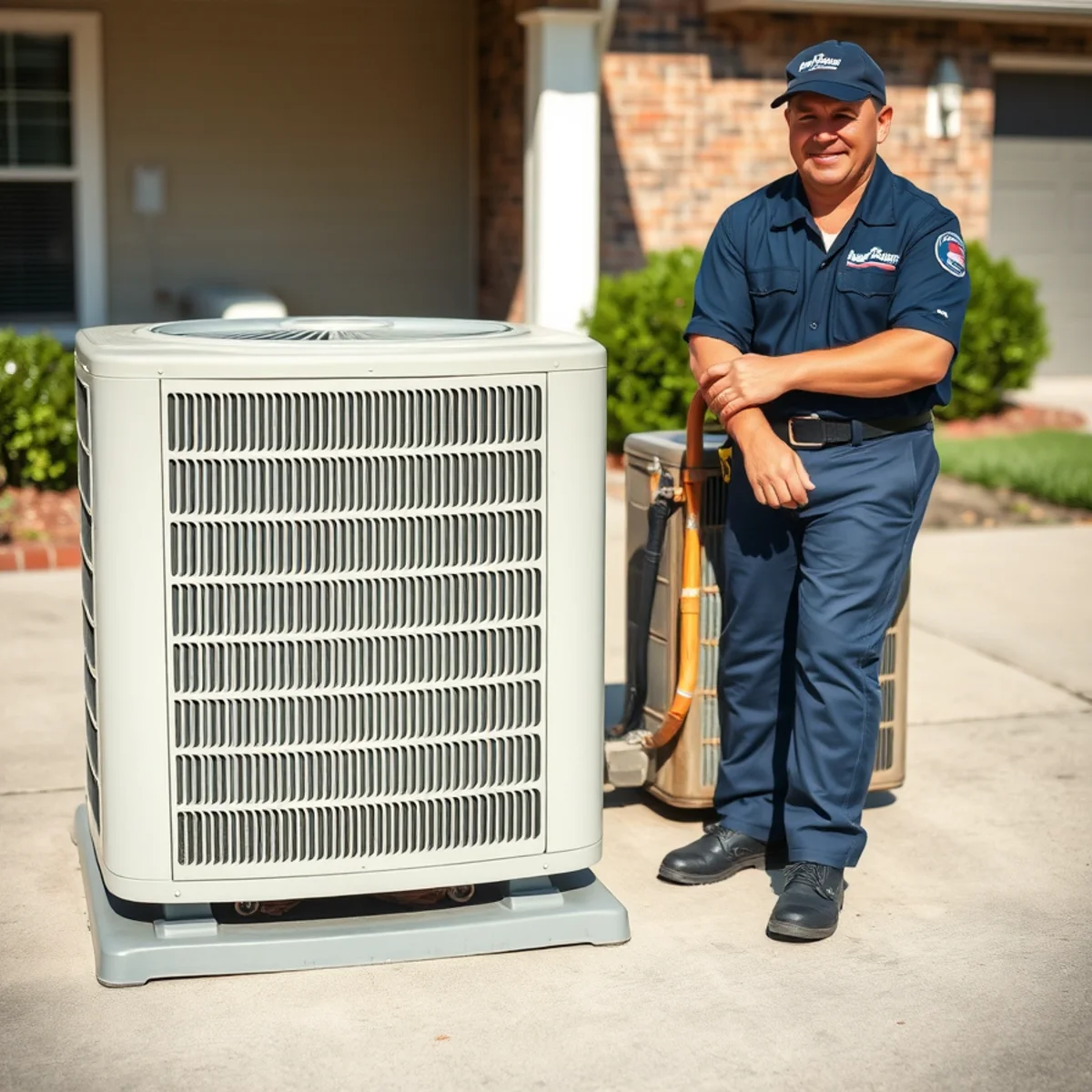
Central air uses one outdoor condenser and one indoor air handler tied to a network of ducts running through your attic, walls, or crawlspace. Cooled air travels through those ducts to every room with a vent. It's a single zone, controlled by one thermostat, conditioning the whole house at once.
A ductless mini-split also has an outdoor unit, but instead of ducts, it connects by a thin line set to one or more indoor heads mounted high on a wall or recessed in a ceiling. Each head cools the room it's in, on its own thermostat. One outdoor unit can run several heads, so you can cool a master bedroom at 70 while leaving an unused guest room off entirely.
That zoning difference is the heart of the comparison. Central air is built to cool everything uniformly. Ductless is built to cool exactly the spaces you choose, room by room.
When a Ductless Mini-Split Makes More Sense
Mini-splits shine when you're adding conditioned space or solving a problem your central system can't reach. If you've converted a garage, finished an attic, built a sunroom, or added a room onto a Ladonia or Smiths Station home, running new ductwork is often expensive and disruptive. A single mini-split head handles that one space cleanly.
They're also the right call for homes with no existing ductwork, for rooms that are always too hot or too cold, and for anyone who wants to stop paying to cool empty rooms. Because there's no duct system to leak, mini-splits avoid the energy losses that ducted systems suffer in hot attics.
- Cooling a garage, workshop, sunroom, or bonus room
- Room additions where extending ductwork is costly or impractical
- Older homes with no ducts or with ducts beyond repair
- One room that the central system never gets right
- Wanting independent temperature control room by room
When Central Air Is the Better Fit
If your home already has good ductwork and you're replacing an aging system, central air is usually the most cost-effective and seamless choice. You keep the ducts, swap the equipment, and every room stays on one simple thermostat. For most three- and four-bedroom homes in Phenix City, that's the path of least resistance and lowest upfront cost per square foot of cooling.
Central air also keeps the equipment out of sight. There are no indoor heads on the walls, just vents you already have. For whole-home cooling where you want consistent temperatures everywhere and a clean look, ducted central air is hard to beat. If your ducts are in rough shape, that's worth addressing as part of the job rather than a reason to walk away from central air entirely.
The Phenix City Humidity Factor
This is where local matters more than any spec sheet. The Chattahoochee River microclimate keeps our summers heavy with moisture, and humidity is as much the enemy as heat. Any system you choose has to pull water out of the air, not just lower the temperature, or your home feels clammy even at 72 degrees.
That moisture also shortens equipment life in ways generic buying advice ignores. It accelerates corrosion on outdoor coils, breeds algae that clogs condensate drain lines, and makes compressors work harder through the longest, hottest stretches of the year. Mini-splits and central systems both handle dehumidification well when they're sized correctly, but an oversized system of either type will short-cycle, cool fast, and leave the air damp. Proper sizing is everything in this valley.
Whichever you pick, plan on routine maintenance. Coil cleaning, drain line clearing, and refrigerant checks keep both systems running efficiently through an Alabama summer. If your system ever runs low on refrigerant, that means a leak that needs proper EPA-compliant detection and repair, not a quick top-off that just leaks out again.
Cost, Efficiency, and the Long View
On upfront cost, replacing central air in a home that already has ducts is typically the cheaper option per square foot. Adding ductwork from scratch flips that math, and a mini-split often wins. For a single room, one mini-split head is far cheaper than extending a central system. For a whole house with no ducts, multiple mini-split heads can rival or exceed central air, so the count of zones matters.
On efficiency, mini-splits have an edge for partial-home cooling because they only run where you need them, with no duct losses. Modern central systems are very efficient too, especially when the ducts are sealed and the unit is right-sized. Over the life of the equipment, the cheapest system is the one that's correctly sized and well maintained, regardless of type. An undersized unit runs constantly; an oversized one wastes money and leaves you humid.
If a larger project pushes your budget, financing is available, and we'll give you honest repair-versus-replace numbers rather than steering you toward whatever costs more. We service all major brands, so you're never locked into one manufacturer.
When to Call a Pro
Sizing, refrigerant handling, electrical, and condensate routing all require a licensed contractor. Getting any of these wrong in our climate leads to humidity problems, short equipment life, and repeat repairs. A proper load calculation, not a rule of thumb, is what tells you the right capacity for your specific home, windows, and insulation.
If you're weighing ductless mini-split installation against a central air conditioning replacement, or planning any AC installation, we'll come look at your home, measure the load, and lay out both options with real numbers so you can decide with clear eyes. Owner Scott Copeland stands behind every install.
Call us at +1 (327) 210-5999 or schedule service online. We'll help you pick the system that actually fits your home and the Chattahoochee Valley summer, not the one with the biggest ticket.
Frequently Asked Questions
Sometimes, yes. A single outdoor condenser can connect to several indoor heads, so a smaller home can be fully cooled with one multi-zone system. Larger homes may need more than one outdoor unit. The right setup depends on your square footage, layout, and a proper load calculation, which we'll do during an in-home estimate.
Need a hand from a local technician?
My Affordable Air has helped Phenix City families breathe better since 1997. Call for honest, licensed HVAC help.