Most indoor AC leaks start with a clogged condensate drain line. Here's how to stop the damage, clear the line safely, and spot problems that need a technician.
Why Is My AC Leaking Water Inside?
Most indoor AC leaks come from a clogged condensate drain line. Algae and sludge block the pipe, water backs up into the drain pan, and it spills over. Other common causes are a failed float switch, a cracked or rusted drain pan, a frozen coil that's thawing, a drain pipe that has come apart, or a condensate pump that has quit.
Turn the system off at the thermostat first, then work through the steps below. A clogged line is often something you can clear yourself. If it keeps coming back, our AC drain line cleaning service clears the line properly and checks the pan and safety switch at the same time.
First Steps: Shut It Off and Protect Your Home
Water and an air handler full of electrical parts don't mix. Act fast, but act safely.
- Set the thermostat to OFF. If water is near wiring or the unit itself, switch off the air handler's breaker too.
- Soak up standing water with towels, and use a wet/dry vac to empty a full drain pan.
- If the unit is in the attic, check the ceiling below it. Stay out from under any drywall that's sagging or bulging with water, and move furniture and electronics out of the way.
- Look for the obvious: a drain pipe that has come loose, a pump that's unplugged, or ice on the refrigerant lines.

The Usual Culprit: A Clogged Condensate Drain Line
Your AC is also a dehumidifier. As warm, humid air crosses the cold indoor coil, moisture condenses into water, drips into a pan and runs out a PVC drain line, usually to the outside near the condenser or into a plumbing drain.
Here's where the Phenix City Humidity Factor comes in. Humid air off the Chattahoochee means our systems pull a lot of water out of the air during a long summer. That warm, constantly wet drain line is perfect for algae and slime. Over a season it builds into a plug, and the water has nowhere to go but over the edge of the pan.
What You Can Safely Do: The Wet-Vac Trick
If the drain line is clogged, a wet/dry vacuum at the outdoor end will often pull the plug right out.
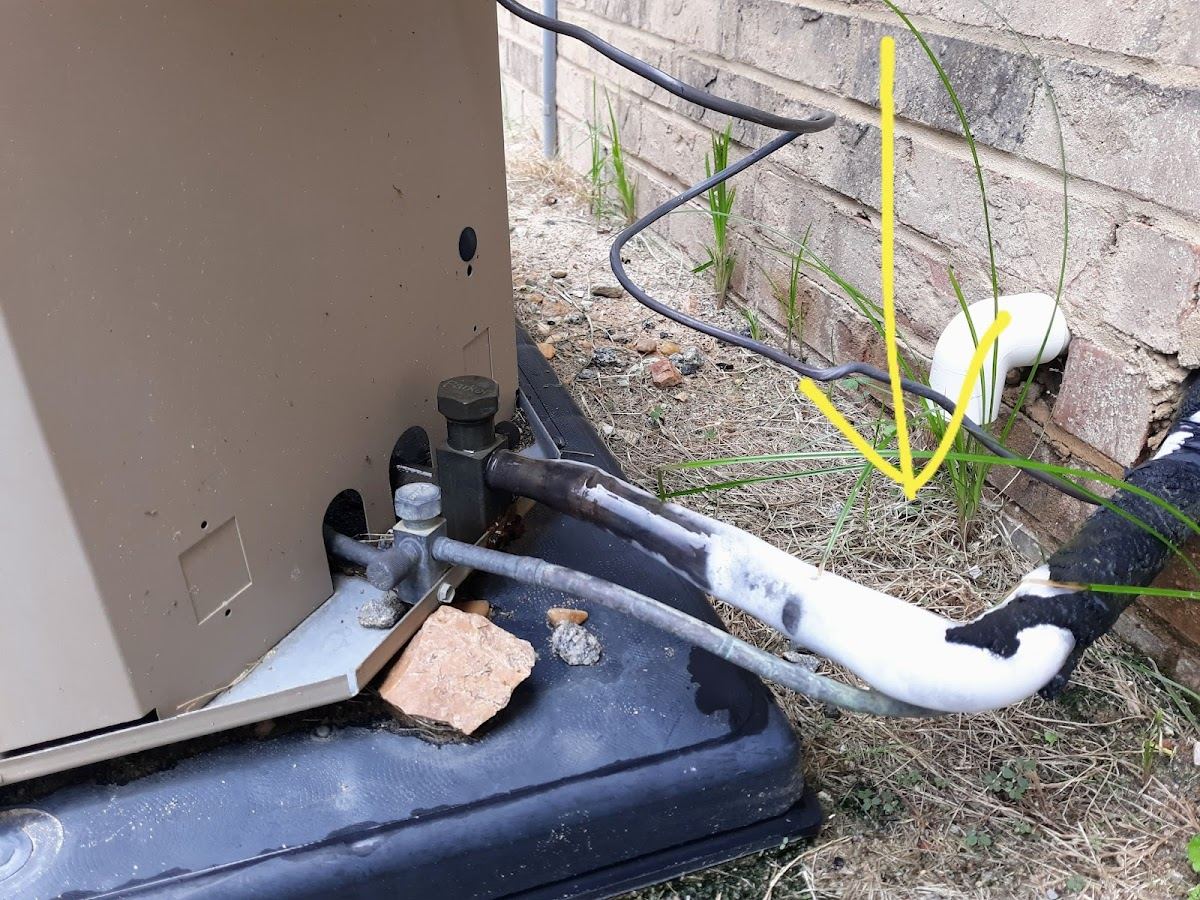
- Find where the drain line ends outside. It's usually a small white PVC pipe near the outdoor unit or poking out of the foundation.
- Take the filter out of the wet/dry vac, or switch it to wet mode, so it can pull water and sludge.
- Hold the vacuum hose over the end of the pipe and seal the gap with your hand or a wet rag. Run it for a minute or two.
- Check the canister. Green or brown sludge means you got the clog.
- Go back inside and make sure the pan is draining. Then turn the system back on and watch it for a while.
- Many systems have a capped T-shaped access port on the drain line near the indoor unit. Some manufacturers allow pouring a cup of distilled white vinegar through it to keep algae down. Check your manual first, and don't pour bleach or harsh drain cleaners into the line unless the manufacturer says it's safe.
Float Switch: Why Your AC Shut Off
Many systems have a float switch, a small safety device in the drain pan or on the drain line. When water rises too high, it cuts power to the cooling system so the pan can't overflow. If your AC stopped cooling and you find a pan full of water, the switch probably did its job. Clear the clog, and the system should restart once the water level drops.
Never bypass or remove a float switch to get the AC running again. It's the only thing standing between a clogged drain and a soaked ceiling. If the pan overflowed while the AC kept running, the switch is missing, stuck or wired wrong, and a technician should check it.
Cracked or Rusted Drain Pans
Every indoor coil sits over a primary drain pan. Older metal pans rust through, and plastic pans can crack after years of heat in an attic. Attic units should also sit in a secondary pan, a larger tray underneath with its own drain line or float switch.
Water in the secondary pan means the primary drain or pan is failing. Many secondary drain lines end above a window or at the eaves where you'll notice them. If water is dripping from a pipe over a window, that's your warning to call before the ceiling takes the hit.
Frozen Coils, Loose Pipes and Condensate Pumps
- Frozen coil: A dirty filter, low airflow or low refrigerant can freeze the indoor coil. When it thaws, it can dump more water than the pan can handle. Turn cooling off, run the fan to thaw it, and lay down towels. Ice that keeps coming back needs frozen AC coil repair, and our guide explains what causes frozen AC coils.
- Disconnected or cracked drain pipe: A PVC joint can slip apart, especially after other work in the attic or closet. Water then drips out at the joint instead of reaching the outside.
- Condensate pump: Units that can't drain downhill, like some closet and garage installs, use a small pump to push water out. If it's unplugged, clogged or burned out, water backs up fast. Check that it has power and listen for its motor.
- Poor slope or installation: A drain line has to run downhill all the way. A sag or a line installed level can hold water and clog over and over.
When to Call an AC Technician
Call if the leak comes back after you clear the line, the float switch keeps shutting the system down, you see ice on the coil or refrigerant lines, the pan is rusted or cracked, the condensate pump has failed, or there's a water stain spreading on the ceiling. Repeated freezing usually points to an airflow or refrigerant problem that needs AC repair in Phenix City and the surrounding area, not just a cleared drain.
The best fix is prevention. A yearly AC maintenance visit includes flushing and treating the drain line, checking the pan and float switch, and keeping the coil clean so it doesn't freeze.
Stop the Leak Before It Damages Your Ceiling
A leaking AC is a small problem that turns into drywall, insulation and mold repairs if it's ignored. Call My Affordable Air at +1 (327) 210-5999. We offer same-day service when the schedule allows, weekend service by call, and upfront pricing you approve before any work starts.
Frequently Asked Questions
It's best not to. Water can damage ceilings, floors and the electrical parts in the air handler, and if the coil is frozen, running it can strain the compressor. Turn it off, clear the drain or let the coil thaw, and call if the leak comes back.
Related Guides
Need a hand from a local technician?
My Affordable Air has helped Phenix City families breathe better since 1997. Call for honest, licensed HVAC help.