
Mini split filters, covers and outdoor coils are homeowner jobs. The blower wheel, indoor coil and drain are where mold hides, and they need a technician.
How Do You Clean a Mini Split?
Turn off the power, then rinse the washable filters every few weeks during heavy use, wipe down the front cover, and gently clear and rinse the outdoor coil. The indoor coil, blower wheel and drain line are a different job. That's where mold and slime build up, and cleaning them means partly taking the head apart and protecting the electronics, so it's work for a technician.
Mini splits run long hours in our climate, often for cooling in summer and heat in winter. That steady use, plus the Phenix City Humidity Factor, means dust and moisture build up faster here than in drier parts of the country. Homeowner cleaning keeps the system breathing between visits. Professional ductless mini-split maintenance handles the parts you can't reach.
Before You Start: Power Off and a Few Supplies
Turn the unit off with the remote, then switch off its breaker or the outdoor disconnect. Never clean any part of the system while it has power. Keep your owner's manual handy, since filter layouts and the way the front panel opens differ by model.
- A soft brush or a vacuum with a brush attachment
- Mild dish soap and lukewarm water
- Microfiber cloths
- A garden hose with a gentle spray nozzle (not a pressure washer)
- A towel, and a sturdy step stool for high wall heads
Step by Step: Cleaning the Filters
Filters are the most important thing you can clean, and the easiest.
- Lift the front panel until it clicks into its open position. Most hinge up from the bottom.
- Slide the mesh filters out. Note how they sit so they go back the same way.
- Vacuum the loose dust off first, then rinse them under lukewarm water. A drop of dish soap helps with greasy filters in heads near a kitchen.
- Let them dry completely in the shade. Direct sun or a hair dryer can warp them, and a damp filter feeds mold.
- Slide them back in, close the panel and restore power.
- Some units also have a secondary filter, like a carbon or allergen insert. Many of those get replaced rather than washed, so check the manual.
Wiping Down the Indoor Unit
With the power off, wipe the cover and the outside of the louvers with a damp microfiber cloth. Don't spray water or cleaner into the head, since the control board and fan motor sit right inside. Don't force the louvers by hand, either. They're motorized and can break.
While you're up there, shine a flashlight into the air outlet. Black specks on the louvers or a dark, fuzzy coating on the round blower wheel behind them is mold. Wiping what you can see won't solve it, because most of the wheel is out of reach. That's the sign it's time for a professional deep clean.
Cleaning the Outdoor Unit
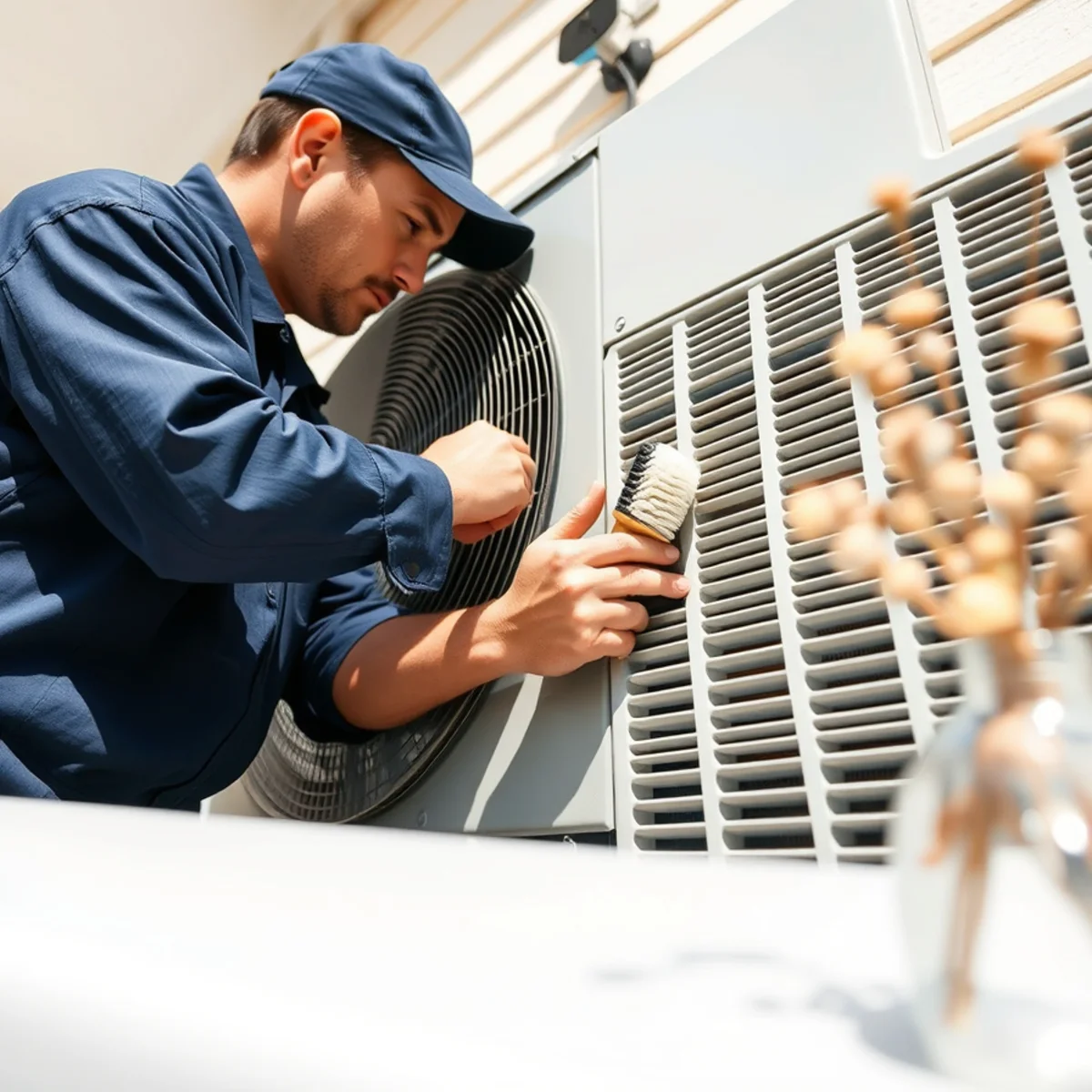
Switch off the outdoor disconnect first. Pull leaves, pine straw, grass clippings and spider webs off the coil by hand or with a soft brush. Trim shrubs back a couple of feet so the unit can breathe.
Then rinse the coil gently with a garden hose, working from top to bottom. Keep the spray soft, and keep it away from the electrical panel on the side of the unit. Never use a pressure washer. It flattens the thin aluminum fins, and bent fins block airflow for good.
In winter, make sure ice and meltwater have somewhere to go. A unit sitting low in a puddle or under a roof drip line tends to ice up.
What Needs a Pro: Coil, Blower Wheel and Drain
A proper deep clean on a wall head starts with protecting the wall and the electronics, usually with a drape or bag kit that catches the runoff. The technician cleans the indoor coil with a coil-safe product and a low-pressure rinse, cleans the blower wheel (sometimes by removing it), and flushes the drain pan and drain line so water flows freely again.
Most visits also include checks you can't do at home: system pressures and performance, electrical connections, the condensate pump if there is one, and the outdoor coil and fan. Store-bought foaming sprays are a gamble. Some leave residue that drips or feeds new growth, and some aren't approved by the manufacturer at all. Our ductless AC service covers single- and multi-zone systems on all major brands.
Why Does My Mini Split Smell Musty?
A musty or dirty-sock smell almost always comes from mold and bacteria growing on the blower wheel, the coil or the drain pan. The coil is wet every time the unit cools, and in a humid river valley it rarely dries out fully. Dust settles into that moisture, and growth follows.
Clean filters slow it down, but they won't remove growth that's already there. A deep clean of the wheel, coil and pan clears it up. To help keep it away, use the coil-dry or self-clean feature if your unit has one, keep filters clean, and don't let a head sit unused all summer in a closed, humid room. If anyone in the house has allergies or asthma, our indoor air quality services can help with the rest of the home's air, too.
How Often Should You Clean a Mini Split in Alabama?
Heavy use and high humidity call for more frequent cleaning than the minimum in many manuals. A good rhythm for most homes here:
- Filters: every two to four weeks during peak cooling season, and about monthly the rest of the year.
- Front cover and louvers: a quick wipe whenever you clean the filters.
- Outdoor unit: a look every month, and after storms, mowing or a heavy pollen week.
- Professional cleaning: at least once a year. Heads in bedrooms, kitchens, garages or homes with pets often need it twice a year.
- Best timing: spring, before the long cooling season starts. Our guide on how often to schedule AC maintenance explains the spring-and-fall approach.
When to Call for a Deep Clean
Call if you see mold on the louvers or blower wheel, notice a musty smell when the unit starts, have water dripping from the head, or haven't had the system professionally cleaned in over a year. Weak airflow after a filter cleaning is another sign the wheel or coil is loaded up. If the unit isn't heating or cooling at all, start with our guide on a mini split not heating or cooling.
Call My Affordable Air at +1 (327) 210-5999 to schedule a mini-split cleaning. We're licensed in Alabama and Georgia, we've served the Phenix City area since 1997, and we quote the work upfront before we start.
Frequently Asked Questions
You can keep the filters and cover clean, and gently brush visible dust off the face of the coil with the power off. A real coil and blower wheel cleaning needs a drape kit, coil-safe cleaner and partial disassembly to protect the electronics, so it's best left to a technician.
Related Guides
Need a hand from a local technician?
My Affordable Air has helped Phenix City families breathe better since 1997. Call for honest, licensed HVAC help.