
A mini split that won't heat or cool is often a remote setting, clogged filters or a tripped breaker. Here's what to check and when it needs a technician.
Why Is My Mini Split Not Heating or Cooling?
Most of the time it's something simple: the remote is in the wrong mode, the filters are clogged, or the outdoor unit has lost power. If those check out, the usual causes are a dirty coil, a fault the unit has shut itself down for (that's what a blinking light usually means), a winter defrost cycle, or a refrigerant leak at the line set that needs a licensed technician.
Ductless systems are a good fit for additions, sunrooms, garages and older homes around the Chattahoochee Valley that were built without ducts. They work a little differently from central air, so the usual troubleshooting doesn't always carry over. If you'd rather skip straight to a diagnosis, our ductless mini-split repair technicians work on all major brands.
Check the Remote and Mode Settings First
A mini split takes its orders from a handheld remote or a wall controller, and those settings are easy to bump. Confirm what it's actually set to first.
- Mode: Pick COOL or HEAT for what you want. On AUTO, the unit chooses for itself, and with the setpoint close to room temperature it may barely run.
- DRY mode: This runs the system slowly to pull moisture out of the air. It's handy on muggy days, but it cools far less than COOL mode.
- FAN mode: Air moves, but the compressor never starts, so nothing gets colder or warmer.
- Setpoint: For cooling it has to be below the room temperature, and for heat it has to be above it. Set it several degrees past the room temperature for a clear test.
- Timers and eco settings: A sleep timer, off-timer or energy-saving mode can shut the unit down or hold back its output without you noticing.
- Batteries: Weak batteries send partial signals. If the head doesn't beep when you press a button, put in fresh ones.
Dirty Filters and Coils Choke a Mini Split
Each indoor head has washable mesh filters behind the front panel. When they load up with dust, pet hair or spring pine pollen, airflow drops and the coil can't trade heat with the room. In cooling mode a starved coil can freeze. In heat mode the unit may run hot and cut back its output to protect itself.
Behind the filters sits the indoor coil, and behind that a long, round blower wheel. In our humid climate both collect a film of dust and mold, which is where the musty smell many owners notice comes from. Filters are a homeowner job. The coil and blower wheel need a technician with the right cleaning kit. Our guide on how to clean a mini split covers what's safe to do yourself.
What Does a Blinking Light on a Mini Split Mean?
A blinking or colored light on the indoor head is usually a fault code. The unit has spotted a problem, such as a sensor reading out of range, lost communication between the indoor and outdoor units, or a pressure or temperature issue, and it has shut down or limited itself to protect the compressor.
Codes differ from one brand and model to the next, so your owner's manual is the only reliable decoder. Count the blinks, note the color and which light is flashing, and write it down for the technician.
Not every light is a fault. Many units show an indicator during defrost or warm-up, and some have a filter reminder. The manual tells you which is which.
You can try one reset. Turn the unit off with the remote, switch off the breaker or the outdoor disconnect, wait several minutes, and turn it back on. If the same light comes back, the fault is real. Repeated resets won't fix it and can be hard on the equipment.
Check the Outdoor Unit, and Know What Defrost Looks Like
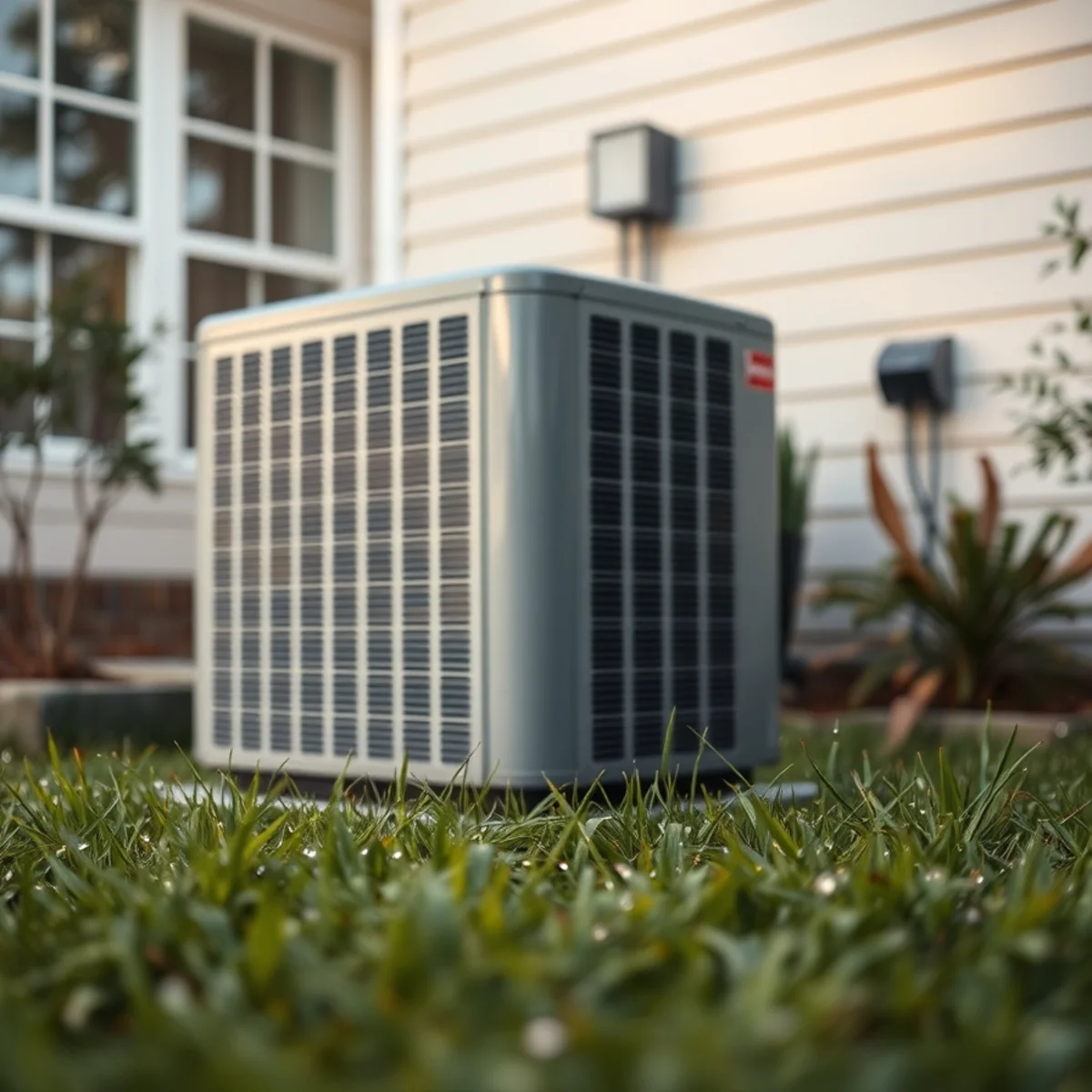
Every indoor head depends on the outdoor unit. With the system calling for cooling or heat, walk outside. You should hear the compressor and see the fan turning, though inverter units ramp up slowly and can run quietly at low speed.
If it's silent, check the breaker in your panel and the disconnect box mounted near the unit. Clear leaves and pine straw off the coil. The control boards and wiring inside carry live voltage, so leave the cover on.
In winter, frost builds on the outdoor coil on cold, damp mornings, and every so often the unit pauses heating to melt it. The indoor fan stops or slows, an indicator light may come on, and the outdoor unit may hiss, click or let off steam. After several minutes heat comes back on its own. That's normal.
What isn't normal is an outdoor unit locked in thick ice, heat that never returns after a defrost, or meltwater freezing into a mound under the unit. A mini split is a heat pump, so the same rules apply. See our guide to a heat pump frozen in winter.
Line-Set Leaks and Low Refrigerant
A mini split is a sealed system. It doesn't use up refrigerant, so low refrigerant always means a leak. On ductless systems, leaks often show up at the flare connections where the copper lines join the indoor head or the outdoor unit, especially if the lines were bumped or a fitting wasn't tightened properly. Corrosion on the outdoor coil is another source, and the Phenix City Humidity Factor speeds that along: moist air off the Chattahoochee is hard on coils and copper.
Signs include cooling or heating that slowly gets weaker, frost on the copper lines at the outdoor unit in summer, an oily spot at a fitting, or a hissing sound. Only EPA-certified technicians can legally handle refrigerant. The right fix is to find and repair the leak, pull a vacuum, and charge the system to the manufacturer's spec. Topping off a leaking system only buys a little time.
Water Dripping From the Indoor Head
Cooling pulls water out of the air, and the indoor head drains it through a small hose that usually runs out the wall with the line set. If that hose clogs with algae, kinks, or loses its downhill slope, water backs up and drips from the bottom of the head or runs down the wall. Some heads use a small condensate pump to lift the water out. If the pump fails, you get the same drip.
A dirty filter can freeze the coil, too, and the meltwater overflows the drain pan. Turn the unit off, check the filters, and look at where the drain hose comes out outside. A clog inside the head needs a technician, and regular ductless mini-split maintenance keeps the drain clear in the first place.
What You Can Safely Check
None of these require opening the equipment.
- Remote set to COOL or HEAT, the setpoint several degrees past room temperature, timers off, and fresh batteries.
- Mesh filters rinsed clean, dried completely and put back.
- Breaker and outdoor disconnect switched on.
- Outdoor unit clear of leaves, plants, ice and anything stacked against it.
- In winter, wait 10 to 15 minutes to rule out a defrost cycle.
- Blink pattern written down and looked up in the manual, followed by one reset.
When to Call a Ductless Technician
Call if a fault light keeps coming back after a reset, the outdoor unit won't run, you see frost on the lines in summer, water keeps dripping from the head, or one zone works while another doesn't. Those point to a sensor, board, drain or refrigerant problem that needs testing. We also handle routine ductless AC service for single- and multi-zone systems, and we'll tell you honestly whether an older unit is worth fixing.
Call My Affordable Air at +1 (327) 210-5999. We've served Phenix City, Smiths Station, Columbus and the surrounding area since 1997, with same-day service when the schedule allows and weekend service by call.
Frequently Asked Questions
Start with the remote: make sure it's in COOL, not FAN, DRY or AUTO, with the setpoint below room temperature. Then clean the filters and check that the outdoor unit is running. If all of that checks out, a dirty coil, a fault or low refrigerant from a leak are the likely causes, and those need a technician.
Related Guides
Need a hand from a local technician?
My Affordable Air has helped Phenix City families breathe better since 1997. Call for honest, licensed HVAC help.